Ecumenism
A prayerful and honest examination of the modern ecumenical movement — its premises, its history, its canonical difficulties, and the Orthodox theological response — for every sincere inquirer. Written with love for all Christians, including those with whom we differ.
"The union of the churches is not achieved through compromise of the truth." — St. Nektarios of Aegina
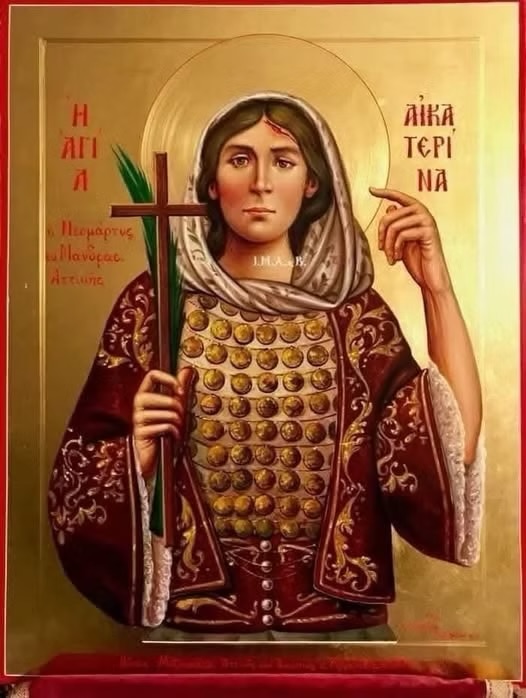
This page is written in memory of St. Catherine of Mandra (†1927) — martyred for refusing to surrender her priest.
The word "ecumenism" derives from the Greek οἰκουμένη — the inhabited world (literally "the inhabited earth"). In its original Orthodox use, "ecumenical" (οἰκουμενικός) meant universal: an Ecumenical Council was one whose authority was recognized throughout the whole Church. The Seven Ecumenical Councils are called ecumenical in this sense — they bind all Orthodox Christians because they express the mind of the whole Church.
In its modern sense, however, "ecumenism" refers to something quite different: the 20th-century movement to achieve visible unity among separated Christian bodies — Roman Catholics, Protestants of all varieties, Anglicans, and Orthodox — on the assumption that they all belong, in some sense, to the one Church of Christ. The World Council of Churches (WCC), founded in Amsterdam in 1948, is its primary institutional expression.
The Orthodox concern about this movement is not a rejection of charitable relations with non-Orthodox Christians, nor a claim that God's mercy cannot reach beyond our full understanding. It is a specific theological observation: the modern ecumenical movement, in its institutional form, rests on an understanding of the Church that differs from how the Orthodox Church has always understood herself — and this difference, however uncomfortable to name, matters deeply for what Christian unity actually means.
"Ecumenism is the common name for the pseudo-Christianity of the pseudo-churches of Western Europe. Within it is the heart of European humanism, with papism as its head. All these pseudo-Christianities, all these pseudo-churches are nothing other than heresies."
— St. Justin Popovich of Serbia (†1979), Orthodox Church and EcumenismKey Canons on Heresy & Common Prayer
Continue Learning